
How Streaming Platforms Recommend Music: The Technology Behind Your Favorite Songs
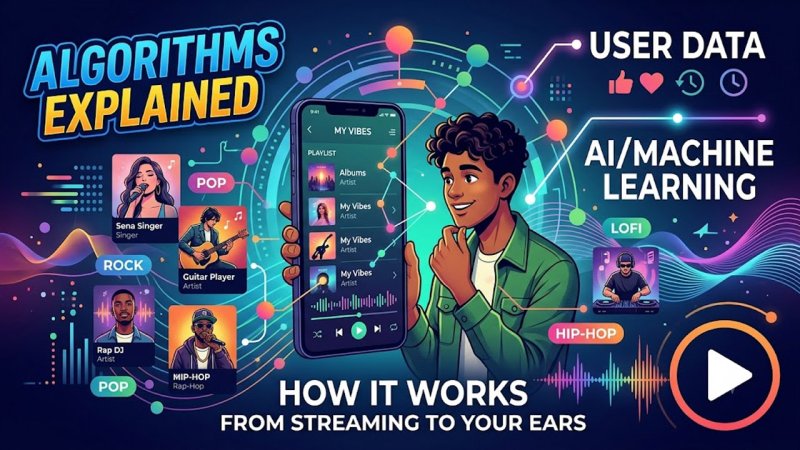
Have you ever wondered how Spotify, Apple Music, YouTube Music, and other streaming platforms always seem to know what songs you'll enjoy? Discover the technology, algorithms, and user data that power modern music recommendations.
How Streaming Platforms Recommend Music: The Technology Behind Your Favorite Songs
Music streaming has completely transformed how people discover and enjoy music. Gone are the days when listeners depended solely on radio stations, television channels, or physical albums to find new songs. Today, platforms such as Spotify, Apple Music, YouTube Music, Amazon Music, and many others help users discover millions of songs instantly.
One of the most impressive features of these platforms is their ability to recommend music that matches individual tastes. Many users are surprised by how accurately streaming services predict what they want to hear next. Whether it's a new artist, a forgotten classic, or a song from another genre, recommendation systems often seem to understand listeners better than they understand themselves.
But how do these platforms actually recommend music? The answer lies in a combination of artificial intelligence, machine learning, user behavior analysis, and massive amounts of data.
Understanding Music Recommendation Systems
A music recommendation system is a technology designed to analyze user preferences and suggest songs that a listener is likely to enjoy. Every time a person listens to a track, skips a song, likes a playlist, searches for an artist, or saves music to a library, valuable information is generated.
Streaming platforms collect and analyze this information to build a personalized music profile for each user. Over time, these profiles become more accurate and allow the platform to provide highly relevant recommendations.
The goal is simple: help listeners discover music they love while keeping them engaged on the platform.
The Role of Artificial Intelligence
Artificial Intelligence (AI) plays a major role in modern music recommendations. AI systems can process enormous amounts of information much faster than humans.
Machine learning algorithms continuously study listening patterns across millions of users. These systems identify trends, similarities, and behaviors that would be impossible for human curators to analyze manually.
For example, if thousands of listeners who enjoy one artist also frequently listen to another artist, the algorithm learns this relationship and may recommend the second artist to similar listeners.
As more people interact with the platform, the recommendation engine becomes increasingly intelligent and accurate.
Analyzing Listening Habits
One of the most important factors in music recommendations is listening behavior.
Streaming platforms may analyze:
- Songs you play frequently
- Artists you follow
- Albums you save
- Playlists you create
- Songs you skip
- Listening duration
- Genres you prefer
- Time of day you listen
- Devices you use
For example, if a user regularly listens to country music during morning workouts and relaxing acoustic music at night, the platform may adjust recommendations based on these patterns.
This creates a highly personalized listening experience.
Collaborative Filtering
A popular recommendation technique is called Collaborative Filtering.
This method identifies users with similar music tastes and uses their behavior to generate recommendations.
Imagine two listeners who enjoy many of the same artists and playlists. If one listener discovers a new artist and listens frequently, the platform may recommend that artist to the other listener.
This approach helps users discover music beyond their current libraries while maintaining relevance to their preferences.
Content-Based Recommendations
Another important method is Content-Based Filtering.
Instead of focusing on listener behavior, this technique analyzes the music itself.
Streaming platforms can evaluate:
- Tempo
- Energy level
- Instrumentation
- Vocal style
- Genre
- Mood
- Rhythm
- Production characteristics
If a listener enjoys energetic pop songs with strong vocals and upbeat rhythms, the platform can recommend similar tracks even if the user has never heard them before.
This helps introduce listeners to new artists while staying within their preferred musical style.
The Power of Playlists
Playlists are a major source of recommendation data.
Millions of users create playlists for workouts, studying, driving, relaxation, parties, and other activities. Streaming platforms analyze these playlists to understand song relationships.
When certain songs frequently appear together in playlists, algorithms recognize these connections and use them to improve recommendations.
Popular playlists often influence music discovery and can help new songs gain significant exposure.
Why Recommendations Keep Improving
Music recommendation systems are not static. They constantly learn and adapt.
Every interaction provides new information. If a listener suddenly develops an interest in jazz after years of listening primarily to pop music, the platform quickly adjusts recommendations to reflect this change.
This continuous learning process helps keep recommendations fresh and relevant.
The Future of Music Recommendations
The future of music recommendation technology is incredibly exciting.
Advances in AI may allow platforms to understand:
- Emotional preferences
- Mood changes
- Activity-based listening
- Real-time personalization
- Voice-based requests
- Context-aware recommendations
Future systems may recommend music based on weather conditions, location, fitness activities, emotional state, or even biometric data from wearable devices.
These innovations could create the most personalized music experiences ever seen.
Conclusion
Music streaming platforms have revolutionized music discovery through sophisticated recommendation systems powered by artificial intelligence, machine learning, and user behavior analysis. By studying listening habits, playlists, song characteristics, and community trends, these platforms help users discover music that matches their unique tastes.
As technology continues to evolve, recommendation systems will become even smarter, making music discovery more personalized, engaging, and enjoyable than ever before. For music lovers around the world, the future of music recommendations promises endless opportunities to explore new artists, genres, and unforgettable songs.
Tags:
Related Posts
Live Music Radio Stations Around the World: Discover Music Without Borders
Explore the exciting world of live music radio stations from every corner of the globe. Learn how online radio helps music lovers discover new artists, cultures, and genres while enjoying live broadcasts anytime, anywhere.
Best Chill Music Radio Stations Online: Relax, Unwind, and Discover Great Music Anywhere
Looking for the best chill music radio stations online? Discover why relaxing internet radio has become a favorite choice for studying, working, traveling, and unwinding. Learn how to find the perfect station for every mood.
How DJs Select Songs on Radio: The Complete Guide to Music Programming and Audience Engagement
Ever wondered how radio DJs choose the songs you hear every day? Discover the strategy, technology, audience research, and music programming behind radio playlists in this complete guide.