
Future of Music Industry in 2030: How AI, Streaming, and Global Trends Will Transform Music Forever
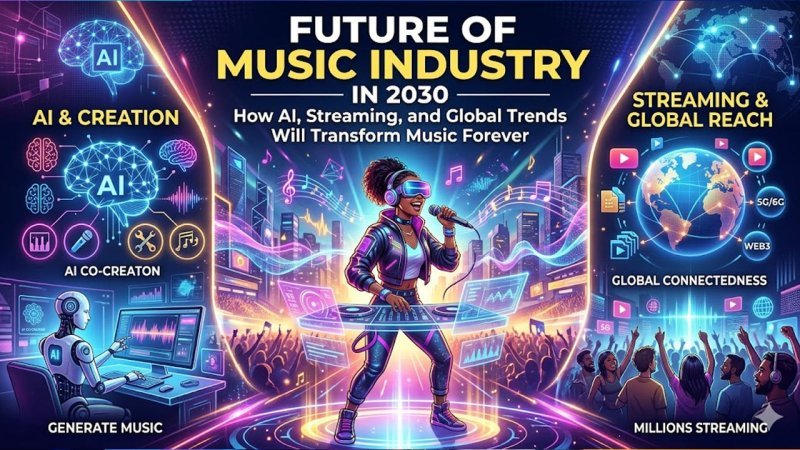
The music industry is rapidly evolving with AI, streaming platforms, virtual concerts, and global digital access. This blog explores how the music world will look in 2030 and beyond.
Future of Music Industry in 2030: How AI, Streaming, and Global Trends Will Transform Music Forever
The music industry is entering one of the most revolutionary periods in its entire history. From vinyl records to digital streaming, music has always evolved with technology. As we move toward 2030, the transformation will become even more powerful, driven by artificial intelligence, global connectivity, immersive experiences, and changing listener behavior. The future of music will not only be about listening—it will be about interacting, creating, and experiencing music in completely new ways.
AI Will Become a Core Part of Music Creation
By 2030, Artificial Intelligence will play a major role in music production. Already today, AI tools can generate beats, suggest lyrics, and assist artists in composing songs. In the future, AI will become even more advanced, capable of understanding emotions, moods, and listener preferences to create personalized music in real time.
Independent artists will benefit the most from this change. High-quality music production will no longer require expensive studios or large teams. Instead, AI-powered tools will allow creators to produce professional-level songs from their laptops or even mobile devices. However, human creativity will still remain important, as AI will act more like a creative assistant rather than a replacement.
Streaming Platforms Will Dominate Even More
Music streaming platforms like Spotify, Apple Music, and YouTube Music have already changed the way people listen to music. By 2030, streaming will become even more personalized and intelligent. Algorithms will understand not only what users like, but also when and why they listen to certain types of music.
For example, your music app may automatically play calm music when you are stressed, energetic songs during workouts, and nostalgic tracks based on your memories or listening history. Music will become deeply integrated into daily life through smart devices, wearables, and even home assistants.
Virtual Concerts and Immersive Experiences
The concept of live music will also evolve dramatically. Virtual concerts will become more common and advanced, using augmented reality (AR) and virtual reality (VR) technologies. Instead of watching a screen, fans will feel like they are inside a live concert environment.
Artists may perform in digital worlds where fans can interact, move around, and even engage with other audience members. This will make concerts accessible to millions of people worldwide without physical limitations. Hybrid concerts (both physical and virtual) will become the new normal.
Globalization of Music Will Increase
By 2030, music will be more global than ever before. Language barriers will continue to disappear as listeners enjoy songs from different countries through translation tools and lyric understanding features. A hit song in Korea, India, the USA, or the UK can go viral worldwide within hours.
Collaborations between international artists will increase significantly. We will see more cross-cultural music blending different genres such as pop, hip-hop, EDM, classical, and traditional music styles from various regions. This global mix will create entirely new sounds and genres.
Online Radio Will Remain Relevant
Even in the age of AI and streaming, online radio will not disappear. Instead, it will evolve. AI-powered radio stations will curate music based on listener behavior, while human DJs will continue to provide personality, storytelling, and emotional connection.
Platforms like Gandas Music aim to bring global radio stations together, helping users explore different cultures, languages, and music styles from around the world.
Independent Artists Will Rise Stronger
The future of music will be highly favorable for independent artists. Social media, streaming platforms, and digital tools will allow artists to publish music without depending on traditional record labels. This will democratize the industry even more.
However, competition will also increase. Millions of new songs will be released every year, making music discovery more challenging. This is why platforms that organize lyrics, artists, and radio content will become extremely important.
Music Will Become More Interactive
By 2030, music will no longer be passive. Listeners will interact with songs in real time. For example, users might be able to change the tempo, mood, or instruments of a track while listening. Games, movies, and music will merge into interactive entertainment experiences.
Fans may also be able to remix songs instantly or create personalized versions using AI tools. This will completely change how people experience creativity.
Conclusion
The future of the music industry in 2030 is exciting, innovative, and highly digital. AI, streaming platforms, virtual concerts, and global connectivity will reshape how music is created, distributed, and enjoyed. While technology will play a major role, the emotional power of music will remain unchanged.
Music will continue to connect people across borders, languages, and cultures. Platforms like Gandas Music will help users explore lyrics, discover artists, and enjoy global music content in this new digital era. The next decade will not just change music—it will redefine it forever.
Tags:
Related Posts
Live Music Radio Stations Around the World: Discover Music Without Borders
Explore the exciting world of live music radio stations from every corner of the globe. Learn how online radio helps music lovers discover new artists, cultures, and genres while enjoying live broadcasts anytime, anywhere.
Best Chill Music Radio Stations Online: Relax, Unwind, and Discover Great Music Anywhere
Looking for the best chill music radio stations online? Discover why relaxing internet radio has become a favorite choice for studying, working, traveling, and unwinding. Learn how to find the perfect station for every mood.
How DJs Select Songs on Radio: The Complete Guide to Music Programming and Audience Engagement
Ever wondered how radio DJs choose the songs you hear every day? Discover the strategy, technology, audience research, and music programming behind radio playlists in this complete guide.